
Expo 2020 Dubai was postponed by the pandemic and finally ran from 1 October 2021 to 31 March 2022. It was the first World Expo held in the Middle East, with 192 participating countries, and its organisers reported more than 24 million visits. For Dubai's property market it was both a short-term boost and a long-term investment.
The short-term effect on rentals
During the six months of Expo, delegations, staff, performers and visitors needed somewhere to stay. Demand for hotel rooms, serviced apartments and holiday homes rose, especially in areas with good access to the site, such as Dubai Marina, JBR, Downtown Dubai and the communities closest to the Expo grounds.
For holiday-home owners it was a clear lesson: large events bring short, intense peaks in demand. Owners who managed pricing and availability well across booking channels benefited most.
Infrastructure that stays
Dubai built much of the infrastructure for Expo to last beyond the event:
- Route 2020, an extension of the Dubai Metro Red Line, connects the site with the rest of the city.
- Road upgrades around the site and Al Maktoum International Airport improved access to the south of the city.
- Permanent buildings on the site, many with LEED certification, were planned from the start for life after Expo.
Better transport makes outlying communities easier to live in, which tends to support rents and prices over time.
Expo City Dubai: the legacy district
After the event closed, the site was first presented as District 2020 and then relaunched as Expo City Dubai: a mixed-use district with homes, offices, schools, parks and attractions, built around sustainability and walkability. In late 2023 it hosted COP28, the UN climate conference, which brought the site back into the international spotlight.
For buyers, Expo City offers new homes in a planned district with the Metro on the doorstep. See our Expo City guide.
Investor interest in the south of Dubai
Expo put the area around the site on the map for international buyers. Dubai South, which surrounds Al Maktoum International Airport, is the clearest example: a master development growing alongside the airport and logistics zones. See the Dubai South guide.
Expo also gave the wider city months of global media coverage, at a time when many people were rethinking where to live and work. That attention became one of several reasons Dubai attracted new residents and buyers from abroad after the pandemic.
What it means for investors today
- Look at transport first. The communities that benefited most were the ones Expo connected to the rest of the city.
- Think long term. Legacy districts and the areas around them take years to fill in. Check what is already open and what is still planned.
- Plan for events. Dubai hosts major events every year. Holiday-home owners who price for peaks and manage bookings well get the most from them.
- Check the supply. New launches in and around Expo City and Dubai South add homes. Compare prices with recent registered sales before you buy.
For a wider view of the market, read our Dubai Real Estate Market Outlook 2024.
Where Propfusion fits
Price and fill holiday homes for every peak
Propfusion's holiday-home module puts every booking for every unit in one calendar, so you see occupancy, blocked nights and revenue at a glance when a big event fills the city.
Bookings, guests, nights and payouts sit alongside your long-term rentals and sales in the same CRM.
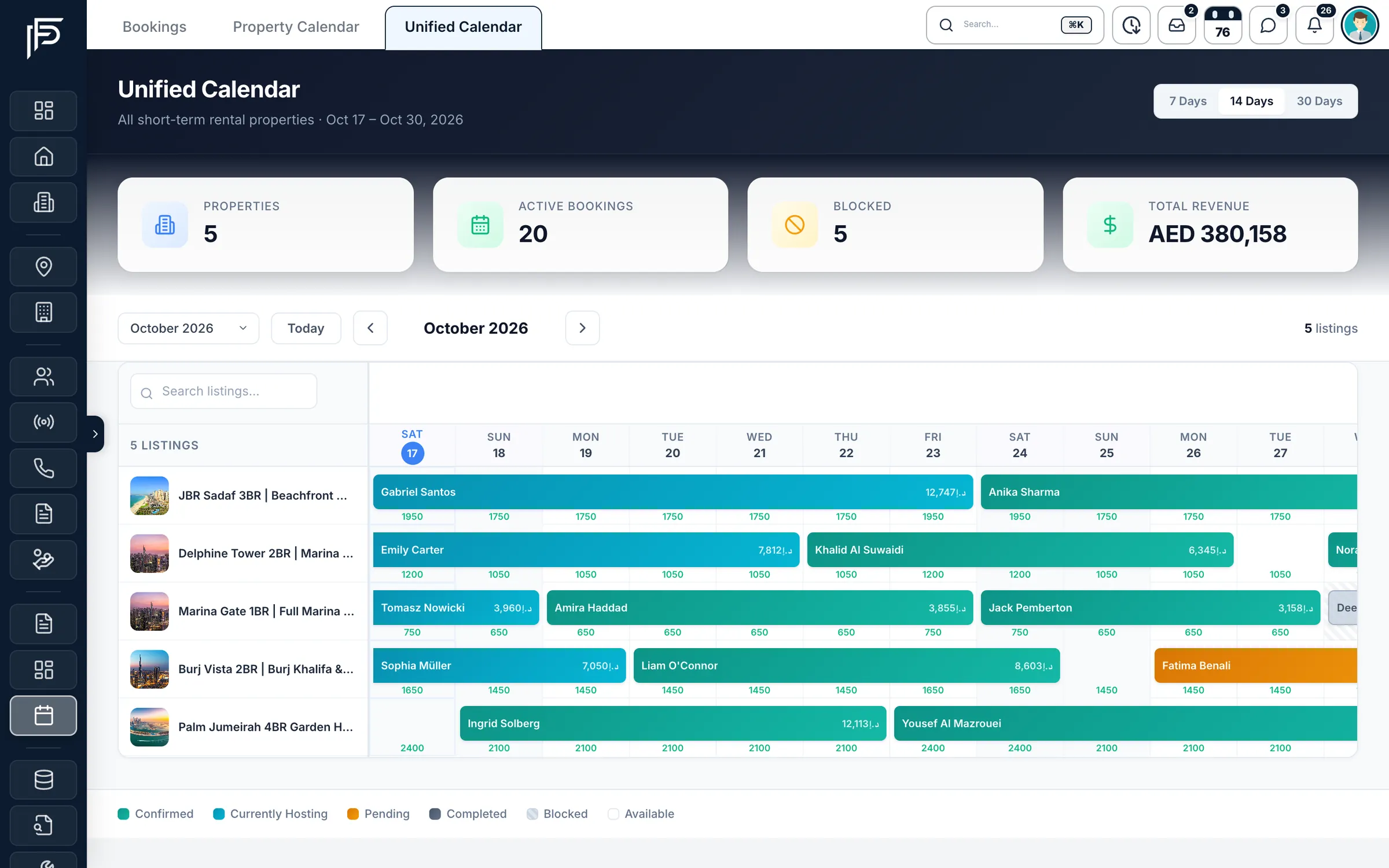
Screens show the Propfusion Demo Realty sample workspace. All people, listings and numbers are fictional.